
Google Ads Headlines
What are Google Ads Headlines?
Google Ads Headlines are short, descriptive phrases used in Google Ads to capture attention and convey the essence of your ad. They are displayed prominently above the ad description and play a crucial role in encouraging users to click the advertisement. Each Google Ad can have multiple headlines (usually up to three), allowing advertisers to present varied options to potential customers.
Why are they Important?
First:
- Headlines are the first thing users notice in an ad. A compelling headline can attract clicks and differentiate your ad from competitors in search results.
Click-Through Rate (CTR):
- Strong headlines can significantly improve click-through rates. Higher CTR generally leads to better Quality Scores, which can lower costs and improve ad placement.
Relevance:
- Well-crafted headlines that include keywords relevant to user searches can enhance the relevance of your ad, improving its performance.
Emphasizing Value:
- Headlines communicate the value of your offerings. They can highlight promotions, unique selling propositions, or solutions to customer pain points.
A/B Testing Opportunities:
- Google Ads allows multiple headlines to be tested against each other, helping determine which phrasing resonates best with the target audience.
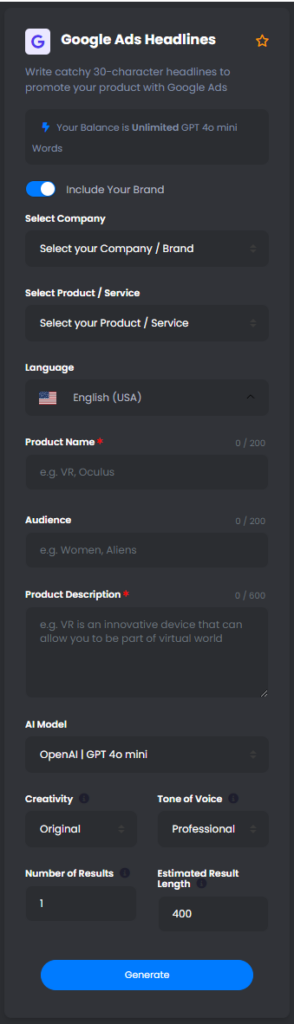
How to Write AI Google Ads Headlines Using Empror
Access Empror:
- Log in to your Empror account or create one if you don’t already have an account.
Identify the Content Generation Feature:
- Find the AI content generation tool designed for creating ad headlines in Empror.
Craft Your Prompt:
- Provide details about your product, service, or promotional offer. Specify any target audience, key selling points, and words you want to incorporate.
Example Prompts:
- “Generate three Google Ads headlines for a new organic skincare line aimed at eco-conscious consumers.”
- “Create attention-grabbing headlines for a limited-time discount on home improvement services.”
- “Write headlines for an online course about digital marketing strategies for small businesses.”
Specify Tone and Style:
- Indicate your preferred tone (e.g., professional, casual, urgent) and any specific lengths or character counts to keep in mind.
Generate the Google Ads Headlines:
- Submit your crafted prompt to Empror, allowing the AI to produce several headline options based on your input.
Review and Edit:
- Evaluate the generated headlines for clarity, appeal, and alignment with your brand message. Adjust as necessary to optimize effectiveness.
Implement the Headlines:
- Use the selected headlines in your Google Ads campaigns to improve visibility and click rates.
Benefits of Writing AI Google Ads Headlines
Time Efficiency:
- AI-generated headlines save time by streamlining the headline creation process, enabling marketers to focus on other campaign elements.
Creative Diversity:
- AI can provide multiple headline options that vary in wording and approach, helping you find unique angles to attract clicks.
Data-Driven Insights:
- AI can analyze keywords and trends within your niche to suggest headlines that are more likely to resonate with your audience.
A/B Testing Flexibility:
- Generated headlines can be easily tested against each other, giving marketers insight into which phrases lead to higher engagement and effectiveness.
Quality Assurance:
- AI can help ensure that headlines are clear, impactful, and correctly capture the essence of the ad content, minimizing errors.
Enhanced Relevance:
- Tailored headlines that include relevant keywords improve the chances of matching user searches, which can lead to better ad performance.
Scalability:
- As businesses grow, the ability to quickly generate high-quality headlines allows them to run multiple ad campaigns simultaneously without sacrificing quality.
Conclusion
Google Ads headlines are essential for the effectiveness of online advertising, playing a pivotal role in attracting attention and improving click-through rates. By using AI tools like Empror to generate compelling headlines, businesses can enhance their advertising strategies, achieving greater visibility and engagement while saving time and resources. This approach ultimately contributes to improved ad performance and can lead to increased conversions and business growth.
(FAQs)
Frequently Asked Questions
Google Ads Headlines are the clickable titles that appear in your ads. They are crucial because they grab potential customers’ attention and encourage them to click through to your website. A compelling headline can significantly improve your ad’s performance.
To craft effective headlines, focus on clarity, relevance, and a strong call to action. Use keywords that resonate with your target audience and address their needs or pain points. Always test different variations to see what works best!
Ideally, your headlines should be concise and captivating, typically up to 30 characters. This ensures they fit well within the ad format and are easily readable on various devices.
While some special characters and emojis can be eye-catching, it’s essential to use them judiciously. Ensure they align with your brand voice and don’t confuse your message. Test them to see how they perform with your audience.
Google Ads allows you to provide multiple headlines for a single ad. Aim for at least 3 to 5 variations. This gives Google the flexibility to test and serve the most effective headline to your audience.
Headlines that create a sense of urgency, offer solutions, or highlight benefits tend to resonate well. Phrasing such as “Limited Time Offer” or “Get Results Fast” can grab attention and prompt action.
Regularly updating your headlines is a good practice. Consider revising them every few months or whenever you launch new products or promotions to keep your ads fresh and relevant.
Yes! There are AI tools available that can help you generate headlines based on your objectives and target audience. This can save you time and ensure you’re consistently creating engaging content.
If your headlines aren’t getting the desired results, analyze the data to identify areas for improvement. Consider A/B testing different headlines, tweaking your messaging, or incorporating feedback from your audience.
Inspiration can come from various sources! Look at competitor ads, industry trends, customer feedback, or even social media. Engaging with your audience can also provide insights into what resonates with them.