
Email Subject Lines
What are Email Subject Lines?
Email Subject Lines are brief descriptive headings that summarize the content of an email. They typically appear in the recipient’s inbox before the email is opened, serving as a preview of the email’s content. Effective subject lines capture attention, convey the email’s purpose, and entice the recipient to open the message.
Why are Email Subject Lines Important?
First Impression:
- Subject lines create the recipient’s first impression of your email, influencing whether they will choose to open it or ignore it.
Open Rates:
- An engaging subject line significantly increases open rates, determining the success of email marketing campaigns or outreach efforts.
Clarity and Relevance:
- A clear subject line accurately sets expectations for the email’s content, ensuring the recipient understands what to expect.
Brand Recognition:
- Consistent and well-crafted subject lines contribute to brand recognition, reinforcing your brand’s voice and identity.
Reduction of Spam Filters:
- Subject lines that are relevant and straightforward help prevent your email from being marked as spam, improving deliverability.
Encourages Action:
- Effective subject lines can inspire a sense of urgency or curiosity, motivating recipients to take action quickly.
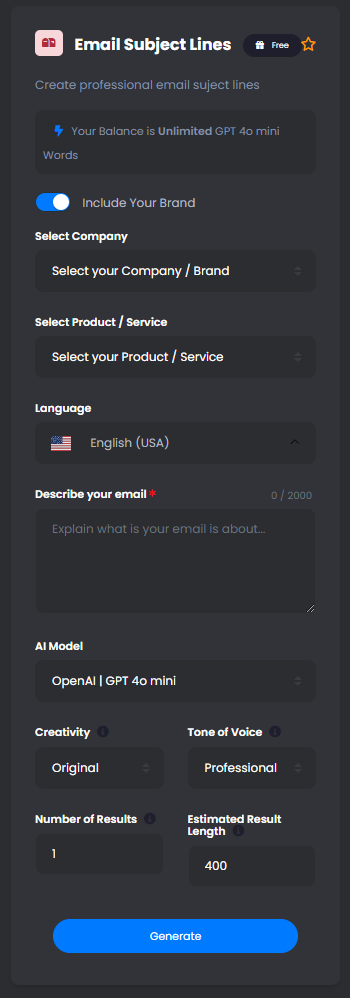
How to Write AI Email Subject Lines Using Empror
Access Empror:
- Log in to your Empror account or create one if you do not already have an account.
Identify the Subject Line Generation Feature:
- Locate the AI content generation tool designed for creating email subject lines.
Craft Your Prompt:
- Provide specific details about the email’s content, purpose, and target audience to help the AI generate relevant subject lines.
Example Prompts:
- “Generate subject lines for a promotional email about a new fitness app.”
- “Create subject lines for a follow-up email after a business meeting.”
- “Write subject lines for a thank-you email to customers after a purchase.”
Specify Tone and Style:
- Indicate the desired tone (e.g., friendly, professional, urgent) and highlight any particular keywords or phrases you want to include.
Generate the Email Subject Lines:
- Submit your prompt to Empror and let the AI create compelling subject lines based on the information you provided.
Review and Customize:
- Review the generated subject lines for clarity, relevance, and engagement potential. Edit them as necessary to better fit your style and goals.
Implement and Test:
- Use the AI-generated subject lines in your email campaigns, and consider testing different variations (A/B testing) to see which perform best.
Benefits of Writing AI Email Subject Lines
Time Efficiency:
- AI-generated subject lines save time, allowing marketers to quickly develop multiple options without extensive brainstorming.
Enhanced Creativity:
- AI can generate unique and engaging subject lines that may not have been considered, adding variety to your outreach strategy.
Personalization:
- AI tools can help tailor subject lines for specific audience segments, increasing the likelihood of engagement and response.
Scalability:
- Quickly create subject lines for a range of emails and campaigns, allowing for streamlined content production.
Consistency:
- AI ensures that the tone and style of the subject lines remain consistent across various email campaigns, reinforcing brand identity.
Improved Performance:
- Well-crafted AI subject lines can boost open rates and engagement, contributing to the overall success of email marketing strategies.
Data-Driven Insights:
- Some AI platforms offer analytics features that help gauge the effectiveness of different subject lines, enabling marketers to refine their approach over time.
Conclusion
Email subject lines are essential for capturing attention and driving engagement with your emails. By utilizing AI tools like Empror to generate effective and compelling subject lines, marketers can save time, enhance creativity, and increase open rates. A well-crafted subject line can serve as a powerful invitation to open the email and engage with the content, making it a crucial element of email communication strategies.
(FAQs)
Frequently Asked Questions
A great email subject line captures attention, sparks curiosity, and encourages the recipient to open the email. It should be concise, relevant, and evoke a sense of urgency or excitement.
To enhance engagement, consider using action-oriented language, personalization, and intriguing questions. Incorporating numbers or lists can also make your subject lines stand out and promise value.
Personalization can significantly increase open rates. By including the recipient’s name or referencing their interests, you create a connection that makes your email feel tailored and relevant.
Aim for 6-10 words or 40-60 characters. This length is optimal for visibility across devices, ensuring your message is clear and impactful without being cut off.
Absolutely! Emojis can add a fun and eye-catching element to your subject lines. However, use them sparingly and ensure they align with your brand voice and the email’s content.
Examples include: “Unlock Your Potential Today!” or “Join Us on a Journey to Success!” These subject lines evoke a sense of possibility and encourage the recipient to take action.
Regularly refreshing your subject lines can keep your content feeling new and exciting. Test different styles and messages to see what resonates best with your audience.
Avoid using all caps, excessive punctuation, or misleading information. These tactics can come off as spammy and may deter recipients from opening your emails.
A/B testing is a powerful method. Send two variations of your subject line to a small segment of your audience and analyze which one performs better before sending it to the rest.
The ultimate goal is to inspire action. A well-crafted subject line should motivate the recipient to open the email, engage with the content, and ultimately take the desired action, whether that’s clicking a link, making a purchase, or signing up for an event.