
Blog Section
What is a Blog Section?
A blog section refers to the individual components or segments of a blog post that contribute to its overall structure and content. This can include the introduction, body (which may consist of several paragraphs or subsections), and conclusion. Each section serves a particular purpose and provides information, insights, or engaging content related to the blog’s topic.
Key Components of a Blog Section:
- Introduction: Introduces the topic and grabs the reader’s attention.
- Body: Provides detailed content, insights, arguments, or analyses around the main topic. This can include subsections for clarity.
- Conclusion: Summarizes key points or calls to action, encouraging further engagement from the reader.
Why is a Blog Section Important?
Structure and Readability:
- Well-defined sections improve the organization of content, making it easier for readers to navigate and comprehend the information presented.
Engagement:
- Clear sections keep readers engaged by breaking up large blocks of text, making it more digestible and inviting to read.
SEO Benefits:
- Structured content can help improve SEO. Utilizing relevant headings (H1, H2, etc.) helps search engine crawlers understand the context and hierarchy of the content.
User Experience:
- A logical flow enhances the reader’s experience, potentially keeping them on the page longer and encouraging them to explore more of your content.
Focused Content Creation:
- Breaking down the content into sections allows writers to focus on specific points, making it less overwhelming and more coherent.
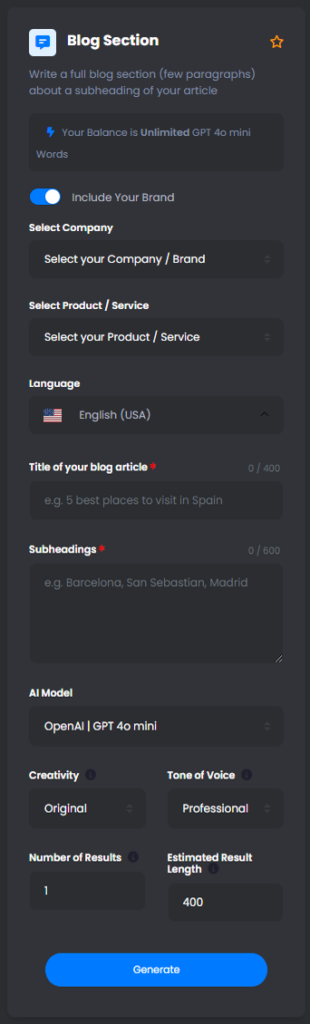
How to Write an AI Blog Section Using Empror
Access Empror:
- Sign in to your Empror AI account.
Identify the Content Generation Feature:
- Look for an AI tool that focuses on writing or content generation specifically for blog sections.
Craft a Detailed Prompt:
- Provide a clear prompt that outlines what you want the AI to generate. Be specific about the topic and the particular section of the blog (e.g., introduction, body, or conclusion).
Example Prompts:
- “Write an introduction for a blog post about the impact of remote work on productivity.”
- “Create a body section discussing three key benefits of mindfulness meditation.”
- “Generate a conclusion that summarizes the importance of time management for students.”
Specify Formatting:
- If needed, mention any formatting preferences or style considerations, like recommended length, tone, or necessary keywords.
Generate the Content:
- Submit your prompt to Empror and allow the AI to generate the requested blog section.
Review and Edit:
- Carefully read through the generated content. Ensure it aligns with your expectations and is factually correct.
- Make necessary adjustments to improve clarity, style, and personality.
Integrate into the Full Blog:
- Once satisfied with the generated sections, incorporate them into your overall blog structure, linking them cohesively to other sections.
Benefits of Writing AI Blog Sections
Efficiency:
- Using AI speeds up the writing process, allowing you to generate well-structured content quickly.
Creativity Boost:
- AI can suggest ideas and phrasing you may not have considered, enhancing your writing with fresh perspectives.
Consistency:
- Maintains a consistent style and tone across sections, especially useful when multiple writers contribute to the same blog.
SEO Optimization:
- AI can help ensure that sections are optimized with relevant keywords, headers, and formatting that aligns with SEO best practices.
Focus on Content Quality:
- By automating parts of the writing process, you can focus more on refining and perfecting your ideas instead of starting from scratch.
Conclusion
Writing blog sections, especially with the assistance of AI tools like Empror, enhances the quality and structure of your content. By leveraging AI for drafting specific sections, you can improve efficiency, encourage creativity, and ensure better organization and readability. Ultimately, this allows you to produce compelling content that resonates with your audience and meets their needs. Embracing AI in your writing process is a smart strategy in today’s dynamic digital landscape.
(FAQs)
Frequently Asked Questions
The Blog Section is a dedicated space on your website where you can share insightful articles, updates, and industry news. It helps engage your audience, improve SEO, and establish your brand as an authority in your field!
Consistency is key! Aim for at least one post per week to keep your audience engaged and to boost your search engine rankings. However, quality should always take precedence over quantity.
Focus on topics that resonate with your audience. Consider industry trends, how-to guides, case studies, and personal stories. Engaging content that addresses your readers’ pain points will keep them coming back for more!
Absolutely! While the primary goal is to provide value, you can subtly promote your offerings by integrating them into relevant blog posts. Just remember to maintain a balance between informative content and promotional material.
Utilize social media, email newsletters, and SEO strategies to promote your blog posts. Engaging headlines, eye-catching images, and sharing on relevant platforms can also help attract more visitors.
An engaging blog post is well-researched, relatable, and written in a conversational tone. Use storytelling, visuals, and interactive elements to keep your readers interested and encourage them to share your content.
Yes! Enabling comments fosters community engagement and allows readers to share their thoughts. Just be sure to moderate comments to maintain a positive and respectful environment.
Track metrics like page views, time spent on page, social shares, and comments. Tools like Google Analytics can provide insights into what content resonates most with your audience.
Definitely! Collaborating with other bloggers can expand your reach and introduce your content to new audiences. Consider guest posts, interviews, or joint projects to foster community and creativity.
Don’t worry! Keep a content calendar and brainstorm ideas regularly. You can also repurpose old content, conduct surveys, or ask your audience what topics they’d like to see covered. Inspiration is everywhere!