
Privacy Policy
What is a Privacy Policy?
A Privacy Policy is a document that outlines how a business or organization collects, uses, stores, protects, and shares personal information from its users, customers, or clients. This document informs individuals about their rights regarding their data and elaborates on what measures the organization takes to protect that data. A Privacy Policy is typically required by law if a business collects personal data and is essential for building trust with users.
Why is a Privacy Policy Important?
Legal Compliance:
- Many countries and regions have laws and regulations (such as GDPR in Europe, CCPA in California) that require organizations to have a Privacy Policy. Failure to comply can lead to legal penalties.
User Trust and Transparency:
- A clear Privacy Policy fosters transparency, helping users understand how their data is used and building trust between the organization and its customers.
Risk Mitigation:
- Having a formal Privacy Policy helps mitigate the risks of data breaches and misuse by clearly outlining organizational practices in data handling.
Brand Reputation:
- Organizations that prioritize user privacy and communicate this through their Privacy Policy can enhance their reputation and stand out from competitors.
User Rights:
- Privacy Policies inform users of their rights regarding data access, correction, deletion, and consent, empowering them to make informed choices.
How to Write AI Privacy Policy Using Empror
Access Empror:
- Log in to your Empror account or create a new account if you do not already have one.
Locate the Privacy Policy Generator:
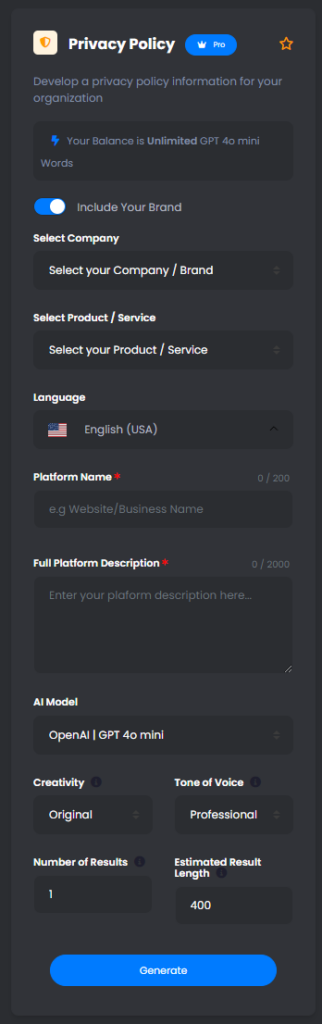
- Find the AI tool within Empror intended for generating Privacy Policies.
Input Organizational Information:
- Enter relevant details about your organization, such as the name, type of business, and contact information.
Specify Data Collection Practices:
- Provide information on the types of personal data you collect (e.g., names, emails, payment information) and how you plan to collect it (e.g., through forms, cookies).
Outline Data Usage:
- Describe how the collected data will be used (e.g., marketing, service improvement, customer support) and if it will be shared with third parties.
Indicate User Rights:
- Define the rights users have concerning their data, such as the right to access, correct, or delete their information.
Generate the Privacy Policy:
- Submit the information and allow Empror to process it, creating a Privacy Policy tailored to your specifications.
Review and Customize:
- Go through the generated Privacy Policy to ensure it accurately reflects your practices and make any necessary revisions to align it with your business needs.
Finalize and Publish:
- Publish the Privacy Policy on your website or platform, ensuring it is easily accessible to users, often linked in the footer or during sign-up processes.
Benefits of Writing AI Privacy Policy
Time Efficiency:
- AI tools can quickly generate a comprehensive Privacy Policy, saving significant time compared to writing one from scratch.
Legal Assurance:
- AI-generated policies are often based on legal standards and best practices, helping ensure compliance with relevant regulations.
Customization:
- AI tools can be tailored to specific industries and organizational practices, creating a more relevant policy for your business.
Regular Updates:
- AI tools can facilitate easier updates as laws change or as your data practices evolve, helping to keep your Privacy Policy current.
Clarity and Consistency:
- Using AI ensures clarity and uniformity in language and structure, making it easier for users to understand their rights and your practices.
Cost Effectiveness:
- Writing Privacy Policies using AI can often be more cost-effective than hiring legal consultants or attorneys for policy creation.
Increased Accessibility:
- An AI-generated Privacy Policy can make complex legal terminology more accessible, ensuring that users can comprehend their rights and your obligations.
Conclusion
A Privacy Policy is a vital document that safeguards both the organization and its users by regulating how personal data is handled. Writing a Privacy Policy using an AI tool like Empror streamlines the process, ensuring compliance and clarity while saving time and resources. The benefits of using an AI-generated Privacy Policy include increased efficiency, legal assurance, customization, and improved user accessibility—helping organizations foster trust and transparency while effectively managing their data practices. By investing in an accurate and user-friendly Privacy Policy, businesses can protect themselves and their customers in an increasingly data-driven world.
(FAQs)
Frequently Asked Questions
Our Privacy Policy outlines how we collect, use, and protect your personal information. We aim to be transparent about our practices and ensure you feel secure while using our services.
We may collect various types of personal information, including your name, email address, contact information, and usage data. This information helps us improve our services and provide a better user experience.
Your personal information is used to enhance your experience with our product, communicate with you, personalize content, and comply with legal obligations. We prioritize your rights and ensure your information is used responsibly.
We do not sell your personal information to third parties. However, we may share your information with trusted partners who assist us in providing our services, always under strict confidentiality agreements.
We implement robust security measures to protect your personal information from unauthorized access, disclosure, or alteration. This includes encryption, secure servers, and regular security audits to safeguard your data.
Yes, you have the right to access, update, or delete your personal information. You can do so by contacting us directly, and we will assist you in making any necessary changes.
You have several rights concerning your personal data, including the right to request access, rectification, erasure, and the ability to withdraw consent at any time. We respect and uphold these rights.
We will notify you of any significant changes to our Privacy Policy through email or by posting a notice on our website. We encourage you to review our policy regularly for updates.
Yes, we take your privacy seriously and store your information in secure environments. Access to your personal information is limited to authorized personnel only, ensuring maximum protection.
If you have any questions or concerns regarding our Privacy Policy, please feel free to reach out to our support team. We are here to help and ensure your trust in our commitment to your privacy.